overlaid history · concept · deck locked
Chronos
See it as it stood. Point your phone at a Greek monument and watch it return, expert-narrated. Delphi is the pilot.
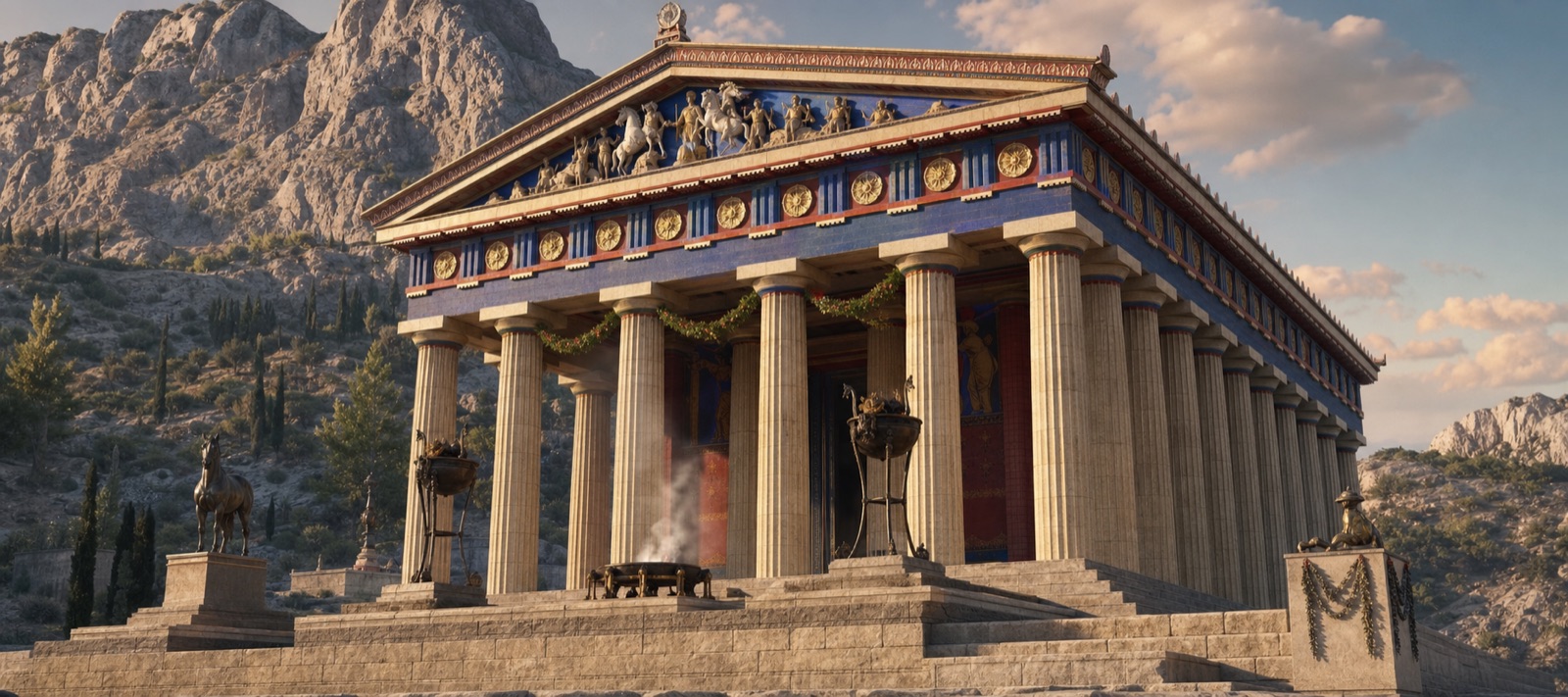
The origin
I want to see it as it stood.
Last spring: six columns, re-erected in the 1930s. Nothing else. Foundation stones where men argued what to tell the Persian court, 480 BC. The negative space of history.
Not what it might have been: as it stood. Dig reports, surveys, polychromy studies, 130 years of scholarship; the public gets a fold-out map and a bench.
Not an audio guide, not a telco app. An evidence-based tour on the visitor’s phone: what the sanctuary was.
The pilot · Delphi
Delphi first: the hardest site. 8 waypoints, 35 minutes, every ruin paired with a drag-between reconstruction, footnoted, speculation flagged.
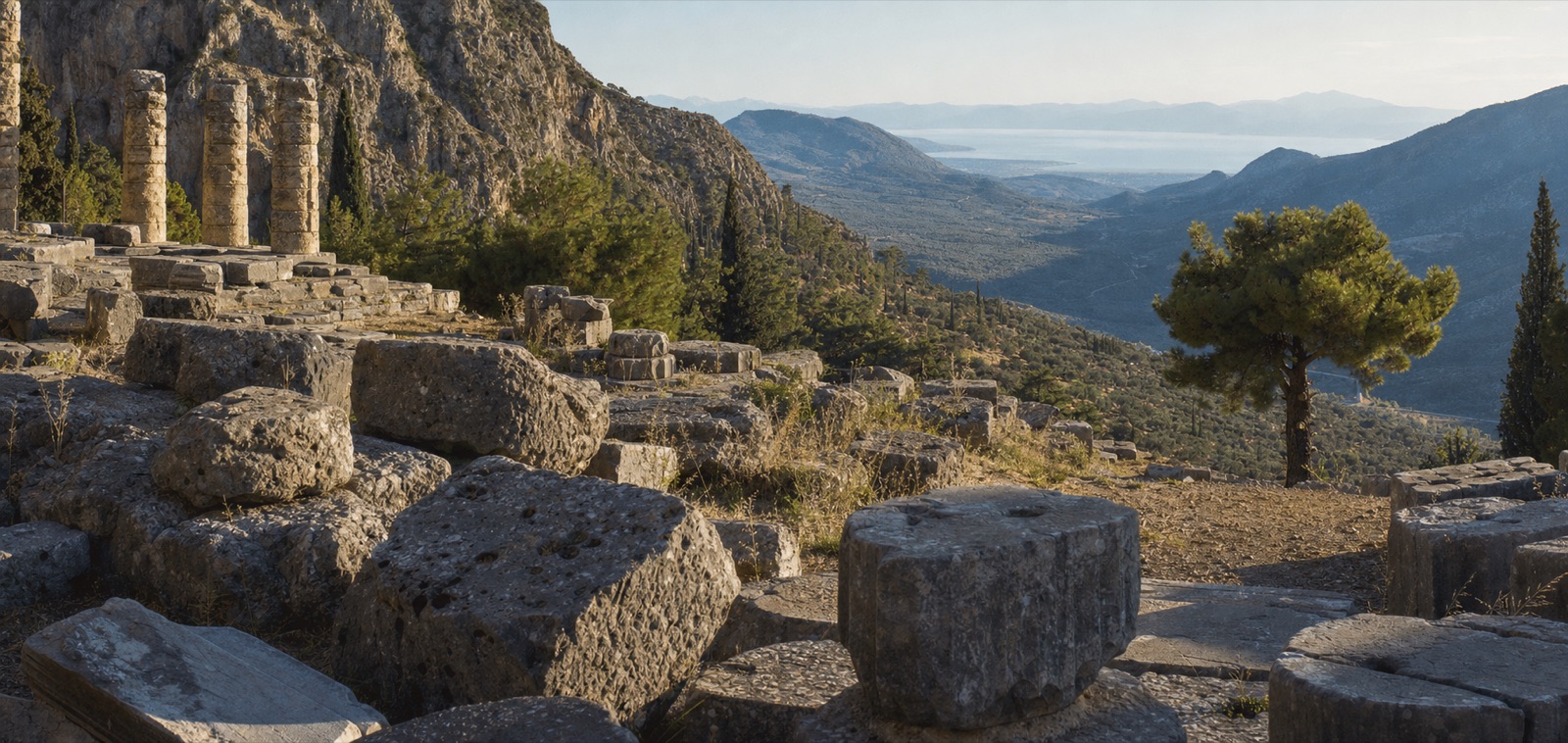
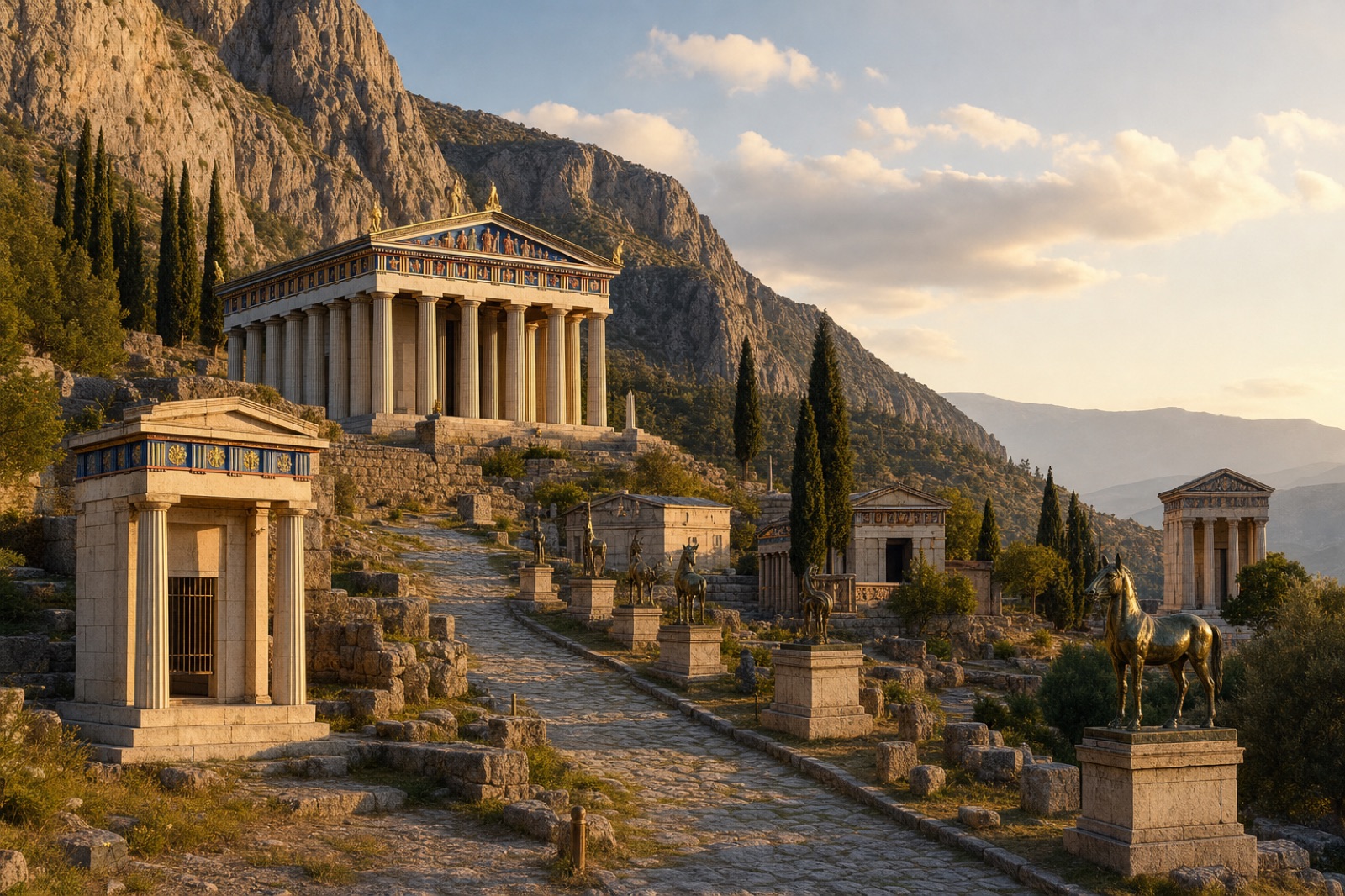
Fig. 01 · the same ground, twice
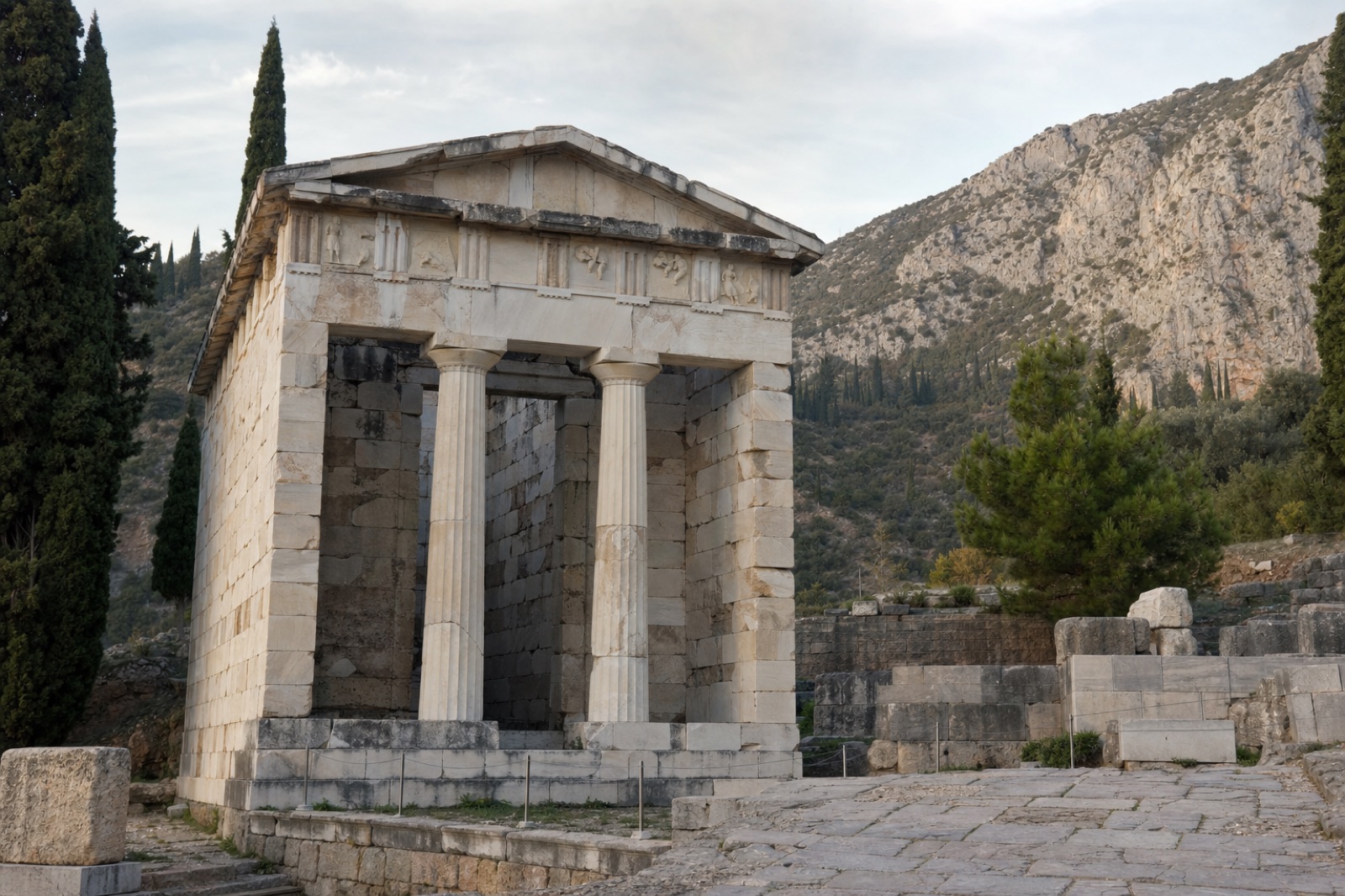
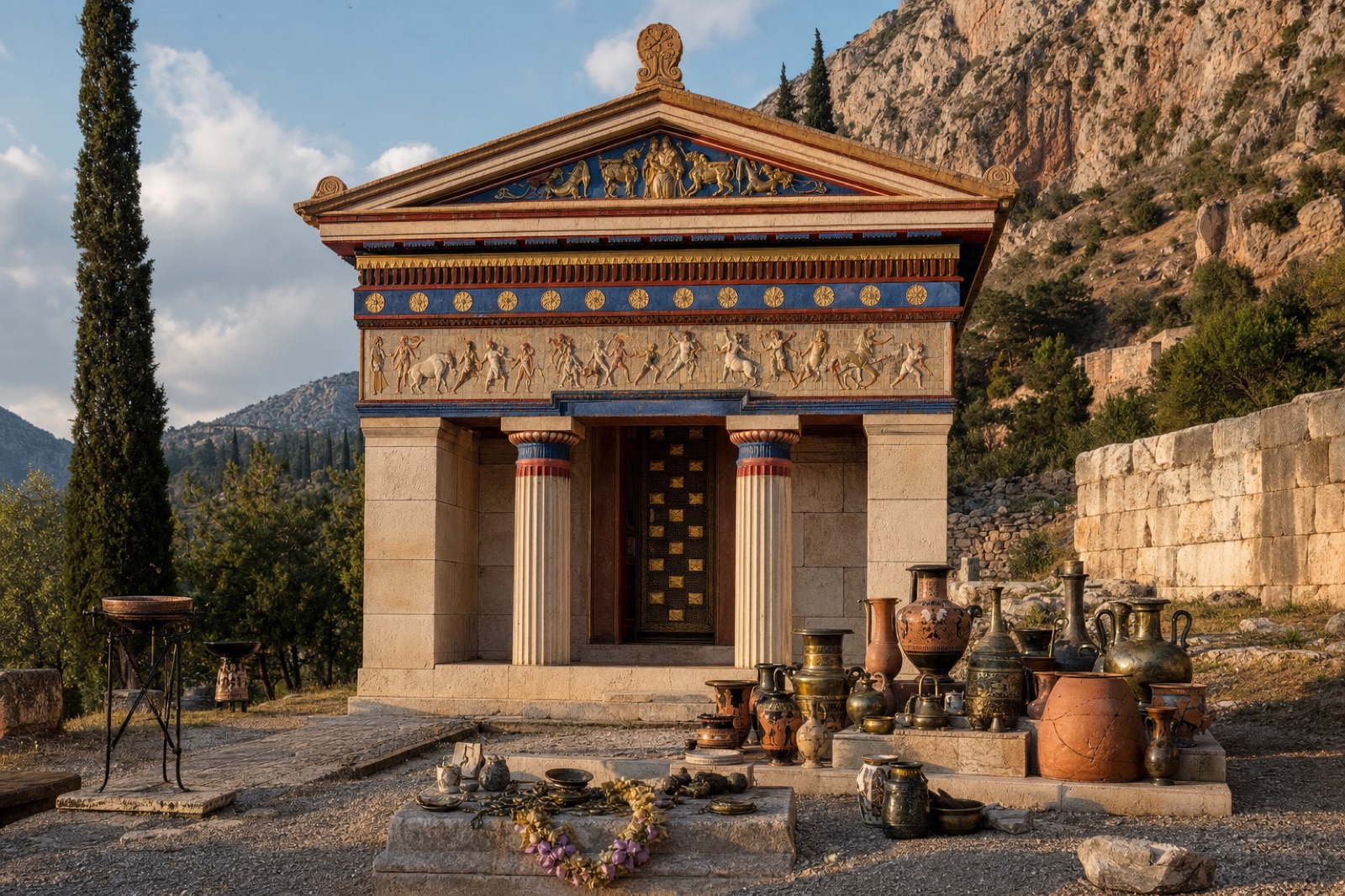
Fig. 02 · Athenian Treasury, WP 03 · the only near-complete survivor; Parian marble, rebuilt after Marathon.
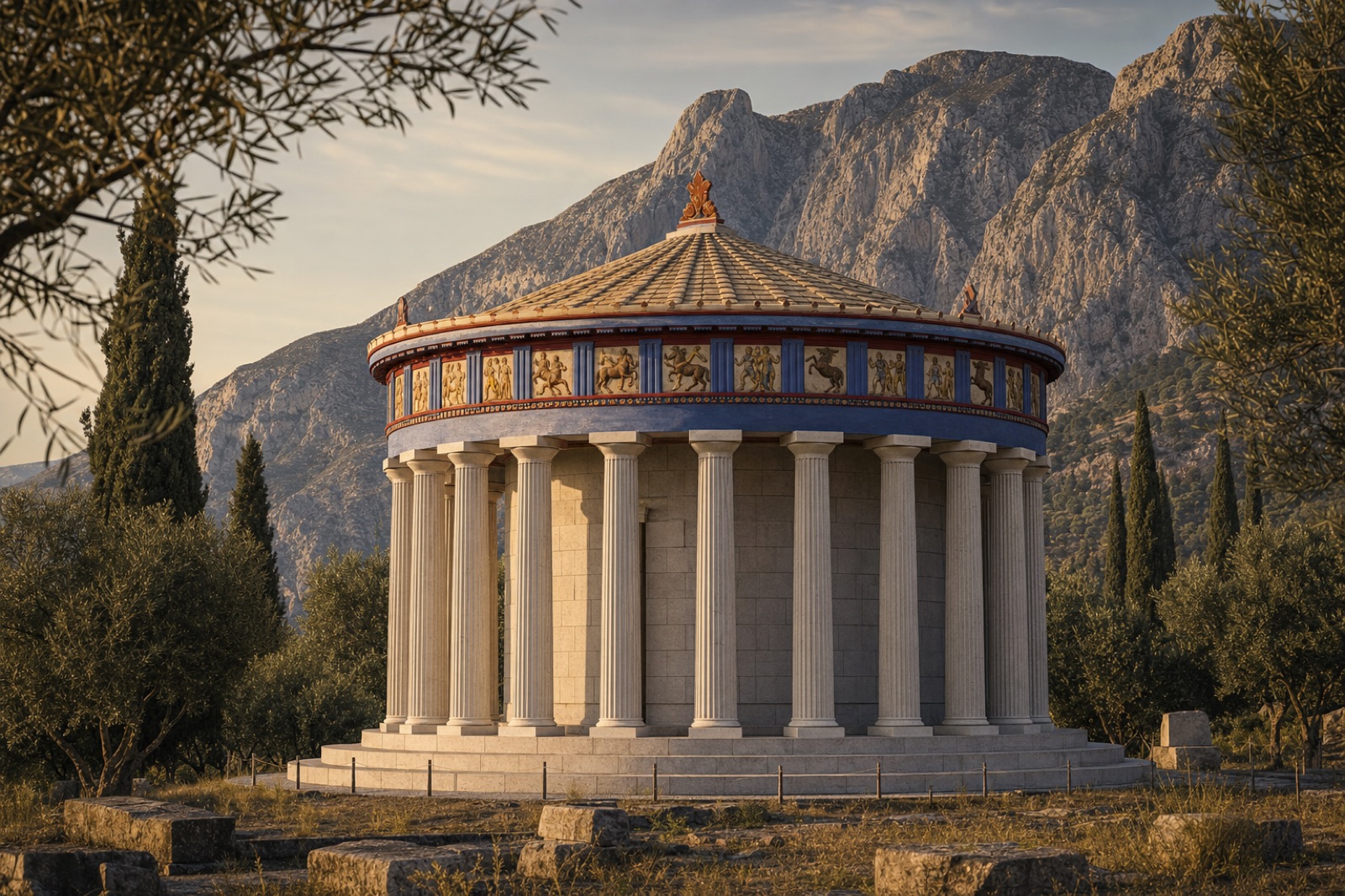
How it works · the wedge
Anchored to the place: it moves as you move. Expert audio per waypoint. Offline-first: no signal needed. Home mode: the monument on the coffee table.
Prestige one-offs don’t scale; audio apps lack AR. The empty middle: an expert-narrated network of produced episodes. The script is the product.
If Delphi works: Olympia, Epidaurus, Sounion, Mycenae. Then Rome. Ephesus. Pompeii. Not a franchise: people who know what happened there.
The accuracy pipeline
- 01
Sign-off. a site archaeologist or partner university, every reconstruction
- 02
Citation. every element source-cited: dig report, inscription, comparanda
- 03
Honesty. speculation flagged: confirmed / reconstructed / speculative
The footnote is the moat